Business Consulting
Business Intelligence (BI): A Complete Guide to Making Data-Driven Business Decisions
Busines-Intelligenc-(BI)-A-Complet--Guide-to-Making-Data-Driven-Business-Decisions-Chanakya-Consulting-Growth-Technology-Strategy-Automation-Intelligence
Modern organizations generate enormous amounts of data every day—from customer interactions and sales transactions to financial reports and operational metrics. However, data alone does not create business value. The real advantage comes from transforming raw data into meaningful insights that help leaders make informed decisions, identify opportunities, and solve business challenges.
Business Intelligence (BI) combines technology, processes, and analytics to collect, organize, visualize, and analyze business data. Instead of relying on assumptions or outdated reports, organizations use Business Intelligence to monitor performance in real time, understand trends, forecast outcomes, and improve strategic planning.
Whether you’re a startup looking to scale, a growing enterprise seeking operational efficiency, or a large organization managing complex data, Business Intelligence empowers every department with actionable insights that drive measurable business growth.
What Is Business Intelligence?
Business Intelligence (BI) is a collection of technologies, tools, and methodologies that transform raw business data into meaningful information. It enables organizations to collect data from multiple sources, organize it into a centralized system, analyze patterns, and present insights through dashboards, reports, charts, and visualizations.
Rather than manually reviewing spreadsheets or disconnected reports, decision-makers can access accurate, real-time information that supports strategic planning, operational improvements, financial management, customer engagement, and risk reduction.
“Business Intelligence transforms data into knowledge—and knowledge into smarter business decisions.”
Why Business Intelligence Matters
Organizations today operate in a highly competitive environment where quick, data-driven decisions are essential. Business Intelligence provides leaders with timely insights that improve performance, reduce uncertainty, and enable proactive decision-making across every department.
Better Decision-Making
Access accurate, real-time data that supports strategic planning and operational decision-making with greater confidence.
Improved Operational Efficiency
Identify process bottlenecks, monitor performance, and optimize business operations using measurable insights.
Enhanced Customer Understanding
Analyze customer behavior, preferences, and purchasing patterns to improve products, services, and customer experiences.
Competitive Advantage
Use predictive insights and performance monitoring to respond quickly to market changes and emerging opportunities.
How Business Intelligence Works
Business Intelligence follows a structured process that converts raw data into actionable business insights. Each stage plays an essential role in ensuring the accuracy, reliability, and usefulness of information presented to decision-makers.
1. Data Collection
Gather data from ERP systems, CRM platforms, accounting software, marketing tools, spreadsheets, websites, and other business applications.
2. Data Integration
Combine data from multiple sources into a centralized repository while eliminating duplicates and inconsistencies.
3. Data Analysis
Apply analytical techniques to identify trends, measure KPIs, detect anomalies, and uncover business opportunities.
4. Data Visualization
Present findings using dashboards, charts, scorecards, and reports that simplify complex business information.
5. Decision-Making
Business leaders use actionable insights to improve strategy, optimize operations, reduce risks, and increase profitability.
Core Components of a Business Intelligence System
Data Warehouse
A centralized repository that stores structured business data collected from multiple operational systems.
ETL (Extract, Transform, Load)
Processes that extract data from different sources, clean and transform it, and load it into the data warehouse.
Analytics Engine
Analyzes historical and real-time data to identify patterns, trends, and actionable business insights.
Dashboards & Reports
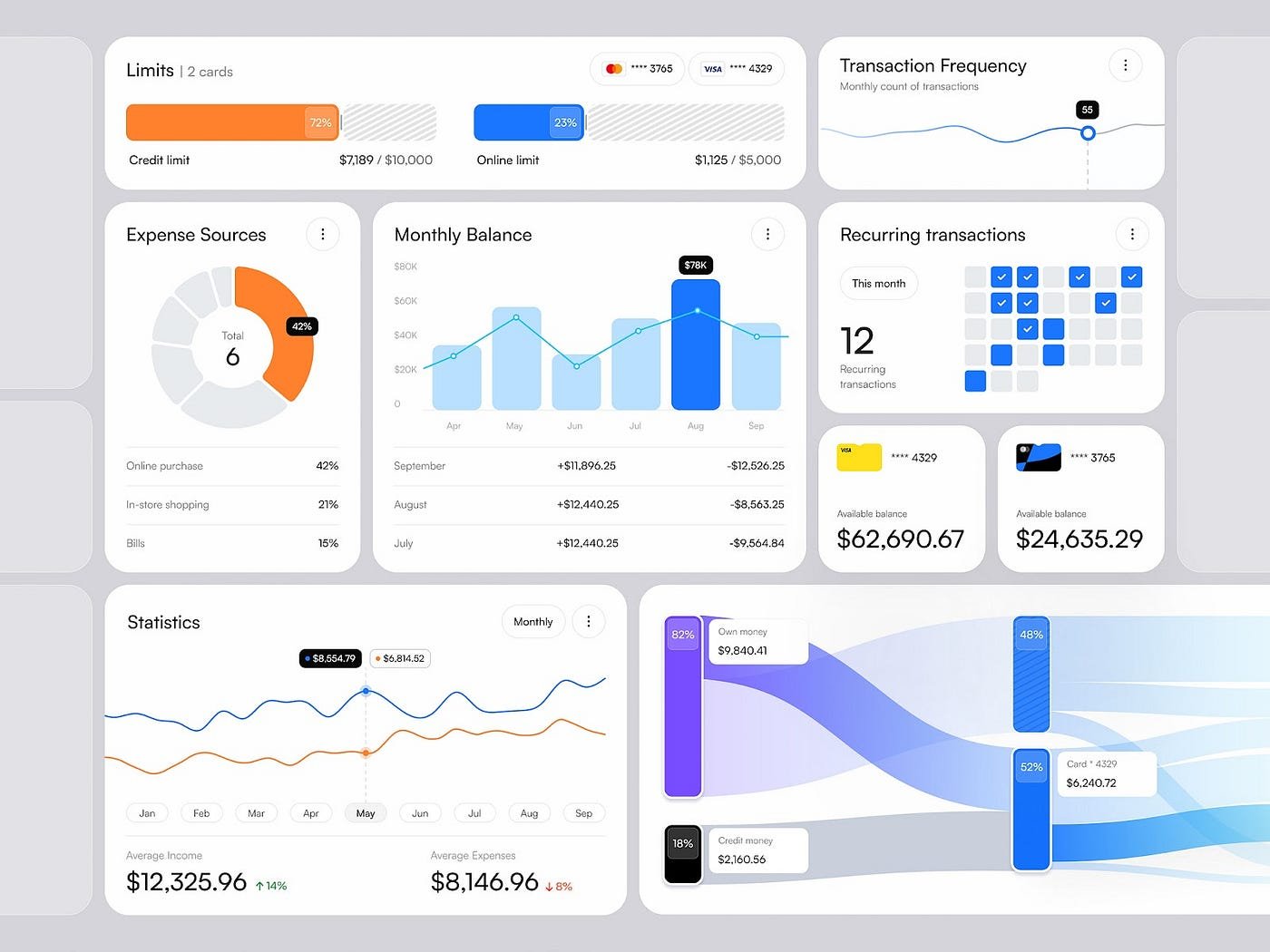
Interactive dashboards provide visual summaries of KPIs, operational performance, and strategic metrics.
Data Governance
Policies and controls that ensure data quality, security, compliance, and consistency across the organization.
Self-Service BI
Allows business users to create reports and dashboards without relying heavily on IT teams.
Key Benefits of Business Intelligence
| Benefit | Business Impact |
|---|---|
| Real-Time Reporting | Monitor performance instantly using live dashboards. |
| Improved Productivity | Reduce manual reporting and automate data analysis. |
| Better Forecasting | Predict sales, demand, and operational trends with greater accuracy. |
| Higher Profitability | Identify cost-saving opportunities and revenue growth areas. |
| Smarter Strategic Planning | Support long-term business decisions using reliable, data-driven insights. |
Types of Business Intelligence
Business Intelligence encompasses various analytical approaches that help organizations understand past performance, monitor current operations, and prepare for future opportunities. Each type of BI serves a different purpose and provides unique value across the organization.
Descriptive Business Intelligence
Descriptive BI focuses on historical data to explain what has happened in the business through reports, dashboards, and performance summaries.
- Sales Reports
- Financial Statements
- Performance Dashboards
- Monthly KPIs
- Operational Reports
Diagnostic Business Intelligence
Diagnostic BI helps organizations understand why specific business events occurred by analyzing relationships, trends, and performance drivers.
- Root Cause Analysis
- Trend Analysis
- Variance Reports
- Performance Comparison
- Business Insights
Predictive Business Intelligence
Predictive BI combines historical data with statistical models to forecast future outcomes and identify business opportunities or risks.
- Sales Forecasting
- Demand Prediction
- Risk Assessment
- Customer Churn Prediction
- Revenue Forecasting
Business Intelligence vs Business Analytics vs Data Analytics
Although these terms are often used interchangeably, Business Intelligence, Business Analytics, and Data Analytics serve different business purposes.
| Feature | Business Intelligence | Business Analytics | Data Analytics |
|---|---|---|---|
| Primary Focus | Business Performance | Future Predictions | Data Exploration |
| Questions Answered | What Happened? | What Will Happen? | Why Did It Happen? |
| Primary Users | Managers & Executives | Business Analysts | Data Analysts |
| Output | Dashboards & Reports | Forecasts & Models | Insights & Patterns |
| Business Value | Operational Decisions | Strategic Planning | Data Discovery |
Business Intelligence Implementation Roadmap
A successful Business Intelligence implementation requires careful planning, high-quality data, stakeholder alignment, and continuous optimization.
Step 1: Define Business Objectives
Identify measurable goals such as increasing profitability, improving customer satisfaction, reducing operational costs, or enhancing decision-making.
Step 2: Identify Data Sources
Collect data from ERP systems, CRM platforms, HR software, finance applications, websites, marketing tools, and external databases.
Step 3: Build a Data Warehouse
Consolidate data into a centralized repository that supports accurate reporting and enterprise-wide analytics.
Step 4: Create Dashboards & Reports
Design interactive dashboards tailored to executives, department managers, and operational teams.
Step 5: Validate Data Quality
Ensure data is complete, accurate, consistent, and regularly updated before generating reports.
Step 6: Train Business Users
Provide employees with training to interpret dashboards, generate reports, and make data-driven decisions confidently.
Step 7: Monitor Performance
Track dashboard usage, business KPIs, and reporting effectiveness to identify improvement opportunities.
Step 8: Optimize Continuously
Expand BI capabilities, integrate additional data sources, and refine dashboards as business requirements evolve.
Common Business Intelligence Challenges
Poor Data Quality
Incomplete, inaccurate, or duplicated data reduces the reliability of reports and business decisions.
Data Silos
Information stored across disconnected systems prevents organizations from obtaining a unified business view.
Low User Adoption
Without proper training and executive support, employees may continue relying on spreadsheets instead of BI dashboards.
Security & Compliance
Organizations must protect sensitive business information while complying with data privacy and regulatory requirements.
Business Intelligence Best Practices
- Define clear business objectives before implementing BI.
- Establish strong data governance policies and quality standards.
- Integrate all major business systems into a centralized data platform.
- Design dashboards tailored to different user roles.
- Train employees to interpret reports and analytics effectively.
- Monitor KPIs regularly and update dashboards as business needs change.
- Protect sensitive data through security controls and user permissions.
- Promote a data-driven culture across the organization.
Before vs. After Business Intelligence
Before BI
- Manual spreadsheet reporting
- Slow access to business data
- Disconnected information sources
- Reactive decision-making
- Limited visibility into KPIs
- Time-consuming report creation
After BI
- Interactive real-time dashboards
- Centralized business data
- Automated reporting
- Proactive, data-driven decisions
- Improved KPI visibility
- Faster business insights
Industry Use Cases of Business Intelligence
Business Intelligence provides valuable insights across every industry by transforming operational data into meaningful business intelligence. Organizations use BI dashboards and analytics to improve efficiency, reduce costs, enhance customer experiences, and support strategic decision-making.
Manufacturing
- Production performance monitoring
- Inventory optimization
- Quality control dashboards
- Supply chain visibility
- Equipment utilization analysis
Retail & E-commerce
- Sales trend analysis
- Customer purchasing behavior
- Inventory forecasting
- Product performance reports
- Marketing campaign analysis
Healthcare
- Patient care analytics
- Hospital performance dashboards
- Resource utilization
- Financial reporting
- Compliance monitoring
Financial Services
- Risk management
- Fraud detection
- Investment reporting
- Profitability analysis
- Regulatory compliance
Human Resources
- Employee performance tracking
- Recruitment analytics
- Workforce planning
- Employee retention analysis
- Training effectiveness reports
Professional Services
- Project profitability
- Client performance reports
- Resource allocation
- Revenue forecasting
- Operational dashboards
Key Performance Indicators (KPIs) for Business Intelligence
Measuring Business Intelligence success requires tracking meaningful KPIs that align with organizational objectives. These metrics help businesses evaluate performance, identify trends, and continuously improve decision-making.
| KPI | Purpose |
|---|---|
| Revenue Growth | Measure business growth over time. |
| Profit Margin | Monitor business profitability. |
| Customer Satisfaction Score | Evaluate customer experience. |
| Operational Efficiency | Track process improvements. |
| Dashboard Adoption Rate | Measure employee usage of BI tools. |
| Decision-Making Speed | Evaluate how quickly leaders respond using BI insights. |
Future Trends in Business Intelligence
Business Intelligence continues to evolve as organizations adopt advanced technologies that deliver faster insights, automate reporting, and improve decision-making.
Artificial Intelligence
AI-powered analytics automatically identify trends, anomalies, and recommendations for better business decisions.
Predictive Analytics
Organizations increasingly forecast demand, customer behavior, financial performance, and operational risks using predictive models.
Cloud Business Intelligence
Cloud-based BI platforms provide scalability, accessibility, and lower infrastructure costs for businesses of all sizes.
Self-Service Analytics
Employees across departments can create dashboards and reports without relying heavily on technical teams.
Frequently Asked Questions
What is Business Intelligence?
Business Intelligence (BI) is a technology-driven process that collects, analyzes, and visualizes business data to support informed decision-making and improve organizational performance.
What are the main benefits of Business Intelligence?
BI improves decision-making, increases operational efficiency, enhances customer understanding, supports forecasting, and provides real-time visibility into business performance.
Who uses Business Intelligence?
Executives, managers, analysts, finance teams, marketing departments, sales professionals, HR teams, and operations managers all rely on Business Intelligence to monitor KPIs and make data-driven decisions.
Can small businesses benefit from Business Intelligence?
Yes. Modern cloud-based BI solutions are affordable and scalable, allowing small businesses to gain valuable insights, improve productivity, and compete more effectively.
How is Business Intelligence different from reporting?
Traditional reporting presents historical information, while Business Intelligence combines reporting, analytics, dashboards, forecasting, and visualization to support proactive business decisions.
The Bottom Line
Business Intelligence empowers organizations to transform raw data into actionable insights that drive smarter decisions, improve operational efficiency, and create sustainable business growth. Instead of relying on assumptions, leaders can use accurate, real-time information to identify opportunities, reduce risks, and respond quickly to changing market conditions.
As businesses continue to generate increasing amounts of data, investing in a robust Business Intelligence strategy becomes essential for maintaining competitiveness. Organizations that embrace data-driven decision-making today will be better prepared for tomorrow’s business challenges.
Better data leads to better decisions—and better decisions drive business success.
Unlock the Power of Your Business Data
At Chanakya Consulting, we help organizations design and implement Business Intelligence solutions that transform data into strategic insights. From dashboard development and KPI reporting to enterprise analytics and digital transformation, our experts help businesses make smarter, faster, and more confident decisions.
Published by Chanakya Consulting — Helping organizations leverage Business Intelligence, Data Analytics, AI, Digital Transformation, Process Optimization, and Strategic Consulting to achieve measurable business success.